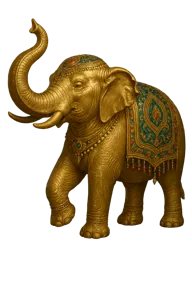
Pillar article
Brahmacharini on Dwitiya of Navratri
Day two belongs to the goddess in penance, not to the daughter of the mountain and not to the cosmic egg. The tithi is Dwitiya in Chaitra or Ashwin.
The second tithi, the unmarried form
Brahmacharini is worshipped on Shukla Dwitiya, the second bright lunar day of Navratri, and she is the form of the Devi in austerity before the household stories of marriage to Shiva. That place in the sequence would be false for Shailputri, who is Pratipada and rides a bull as the mountain's daughter, and false for Kushmanda, who is Chaturthi. Dwitiya opens both the spring Navratri of Chaitra and the autumn Navratri of Ashwin. The civil date moves every year. A remembered Tuesday from a past October is not the tithi. The panchang names when Dwitiya starts and when it ends, and a tithi that ends in the morning does not fill the whole calendar date. Colour lists for day two are seasonal customs. They are not the goddess. This account will not assign one.
Rosary, pot, and the path on foot
She is shown walking, not mounted, holding a japamala and a kamandalu. The rosary is the sign of repeated prayer. The water pot is the sign of the ascetic's few needs. Those two objects are how you tell her from Chandraghanta on Tritiya, who is a married, armed form, and from Kaalratri on Saptami, whose usual vehicle is a donkey and whose face is fierce. The 'purity' in her name is brahmacharya, a disciplined unmarried state, not a judgement on the worshipper's private life. Households keep a fast according to their own rule, light a lamp, and recite from the Durga Saptashati if they are reciting the whole nine nights. Day two does not have a separate Veda. The second charita of the Saptashati is not pinned to Dwitiya by a law this page will invent. Many families simply continue the text they began on Pratipada.
Austerity is not a 12th-house prediction
People like to match Brahmacharini to the 12th house, moksha and letting go, or to Ketu. The festival does not move those houses. A native with a strong 12th may feel the fast as kin to their chart. A native with a strong 2nd, family and food, may feel the fast as an interruption. Neither reading is why Dwitiya is kept. It is kept because it is the second of the nine tithis. No rashi receives a purity score that day. Personal timing remains the Vimshottari dasha, which does not reset on Dwitiya. If you are choosing the day to begin a vow, use this year's panchang for the Navratri you mean, Chaitra or Ashwin, and keep the form that belongs to Dwitiya. The goddess on foot is not a transit.
Frequently asked questions
Which tithi is Brahmacharini's?
Shukla Dwitiya, in Chaitra Navratri and again in Ashwin Navratri. The weekday changes with the year.
How is she shown?
On foot, with a rosary and a water pot, as the ascetic form. She is not the bull-riding Shailputri of the first day.
Does this day change a kundli?
No. It is a lunar tithi of the Devi. The 9th house may describe a person's pull toward worship. It does not take a new lord at Dwitiya.
Ask the AI astrologer about this topic
Apply what you read here to your own kundli. Sign up free, save your chart, and chat about marriage, career, remedies, or timing, in plain English or traditional Astrologer mode.
Free birth chart studio
D1, D9, D10, dashas, yogas, and transits, the same calculations referenced in this article.